
 简中
简中In the world of solar energy, efficiency and safety are the twin pillars of a successful installation. Whether you are looking at a residential rooftop or a massive utility-scale solar farm, the DC Combiner plays a critical role in managing the flow of power.
But what exactly happens inside this box, and why is it indispensable? This article explores the inner workings of the DC Combiner, breaking down its functions and why it is a cornerstone of modern photovoltaic (PV) systems.
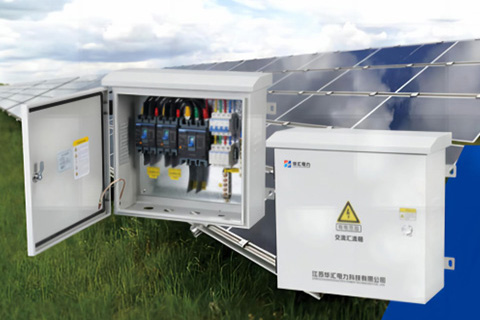
What is a DC Combiner?
At its simplest, a DC Combiner is an electrical distribution box where multiple strings of solar panels are joined into a single parallel circuit.
In a typical solar array, panels are connected in series to form "strings" to reach the desired voltage. However, to reach the desired power capacity, many of these strings must be connected together. The DC Combiner serves as the central junction point where these individual inputs meet before the consolidated power is sent to the inverter.
How a DC Combiner Operates: The Step-by-Step Process
The operation of a DC Combiner is a blend of simple connectivity and sophisticated protection. Here is how the process flows from the sun to the inverter:
1. Consolidating Multiple Inputs
The primary job of the DC Combiner is to take the DC (Direct Current) output from various solar strings. Instead of running dozens of separate wires all the way to your inverter—which would be expensive and messy—the wires are fed into the combiner box. Inside, the current from all these strings is merged onto a single set of thick busbars.
2. Overcurrent Protection
Safety is where the DC Combiner truly proves its worth. Each string that enters the box is typically equipped with its own fuse or circuit breaker. If one string experiences a fault, such as a short circuit or a "back-feed" from other strings, the fuse will blow or the breaker will trip. This isolates the problem string and prevents damage to the rest of the solar array.
3. Surge Suppression
Solar arrays are often located in wide-open spaces or on rooftops, making them vulnerable to lightning strikes and voltage spikes. Most high-quality DC Combiner units include Surge Protective Devices (SPDs). These components act as a shield, diverting excess voltage to the ground before it can reach and destroy the expensive solar inverter.
4. Disconnecting the System
Maintenance is an inevitable part of any energy system. A DC Combiner often features a main DC disconnect switch. This allows technicians to manually cut off the flow of power from the entire solar array to the inverter, ensuring a safe environment for repairs or inspections.
Core Components Inside the Box
To understand how it works, we must look at what is inside. A standard DC Combiner is housed in a weather-resistant enclosure and contains several key parts:
Input Terminals: Where the positive and negative wires from each solar string are connected.
Fuses and Holders: Protective elements that prevent high-current faults.
Busbars: Conductive metal plates (usually copper or aluminum) that physically join the current from all inputs into one output.
Surge Protective Device (SPD): Protects the system from external electrical surges.
Main Output Terminals: Where the combined, high-current electricity exits the box to travel to the inverter.
Monitoring Hardware: In "smart" versions, sensors measure the current and voltage of each string to detect performance issues in real-time.
Why Use a DC Combiner?
Using a DC Combiner is not just about organizing wires; it offers several technical and financial advantages:
Reduced Material Costs: By combining strings early in the circuit, you only need one pair of large-diameter wires to run to the inverter, rather than many pairs of smaller wires. This significantly reduces the cost of copper and conduit.
Simplified Troubleshooting: If a solar array isn't performing as expected, a technician can check the individual string outputs within the DC Combiner to quickly identify which specific group of panels is underperforming.
Enhanced Safety: By centralizing fuses and disconnects, you create a safer environment for both the equipment and the personnel operating it.
Compliance: National electrical codes (such as the NEC in the United States) often require specific types of overcurrent protection and rapid shutdown capabilities, which are most easily managed via a DC Combiner.

Conclusion
The DC Combiner is the "traffic controller" of a solar power system. It takes the disparate streams of energy from dozens of solar panels, filters them for safety, protects them from surges, and sends a unified, powerful stream of electricity toward the inverter. Without it, scaling solar energy for commercial or industrial use would be significantly more dangerous and costly.


