
 简中
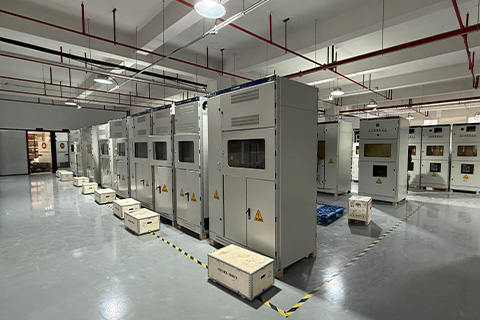
简中In the complex world of modern power systems, operational reliability is not achieved through a single device — it is built through coordination, protection, and precision. Among the many components that make this possible, the grid-connected cabinet plays a crucial yet often understated role. Positioned at the junction between distributed power sources and the main grid, it acts as the foundation that upholds consistent, safe, and efficient operation.
1. Ensuring a Stable and Balanced Power Connection
The first step toward reliability is stability. A grid-connected cabinet maintains balance between the power source and the grid by ensuring accurate voltage and frequency synchronization. This coordination prevents fluctuations that could disturb the network’s equilibrium. Whether power is flowing from a renewable source or an industrial generator, the cabinet’s precise control ensures that the connection remains smooth, minimizing disturbances and maintaining continuous energy supply.
2. Strengthening Electrical Protection Mechanisms
Reliability begins with safety, and the grid-connected cabinet provides a strong line of defense. It integrates circuit breakers, isolation switches, surge protection, and overcurrent devices that work together to detect and respond to faults instantly. When a short circuit or overload occurs, the cabinet isolates the affected circuit, preventing damage from spreading across the system. This layered protection structure not only preserves equipment integrity but also ensures that operations continue with minimal disruption.
3. Supporting Real-Time Monitoring and Predictive Maintenance
In modern infrastructure, reliability extends beyond mechanical durability — it depends on visibility and foresight. Grid-connected cabinets equipped with intelligent monitoring systems collect real-time data on voltage, current, power factor, and temperature. These data points allow operators to assess performance and detect irregularities before they escalate into faults. By transforming raw data into actionable insights, predictive maintenance becomes possible, significantly reducing downtime and improving overall operational continuity.
4. Enabling Seamless System Coordination
Power systems today are more interconnected than ever. A grid-connected cabinet acts as a coordination hub, ensuring smooth communication between energy sources, inverters, and control systems. It manages switching sequences, synchronizes load sharing, and provides control interfaces for operators. This precise orchestration of power flow reduces strain on individual components and ensures consistent performance, even under varying load conditions.
5. Providing Structural Durability and Design Reliability
Beyond its internal functions, the physical construction of a grid-connected cabinet also contributes to operational reliability. Built with durable enclosures, secure connections, and logical internal layouts, it withstands environmental stress while simplifying maintenance. Every detail — from terminal spacing to ventilation design — plays a part in ensuring stable, long-term operation. Reliability, in this sense, is not only a performance metric but also a reflection of design integrity.
6. Supporting System Expansion and Adaptability
A reliable power system must not only perform well today but also adapt to tomorrow’s needs. The grid-connected cabinet’s modular design allows for easy expansion, integration of new components, or upgrades in protection and monitoring. This flexibility ensures that as operational demands grow, the system remains dependable — a balance of consistency and adaptability that defines true reliability.

Conclusion
The reliability of a power system is often judged by what is unseen — the steady connection, the uninterrupted flow, the quiet assurance that everything works as it should. The grid-connected cabinet embodies that quiet assurance. Through protection, control, monitoring, and adaptability, it transforms complexity into stability.
In every reliable network, there is a point where technology and trust meet — and that point, more often than not, is found within the grid-connected cabinet.


