
 简中
简中In modern power systems, grid-connected cabinets act as the vital interface between distributed energy sources and the public grid. Their installation is not only about technical precision — it’s also about safety, stability, and long-term reliability. Every detail, from wiring layout to grounding design, must align with strict safety standards to ensure the entire system operates smoothly and securely. Understanding these standards helps both engineers and operators build systems that are not only efficient but also trustworthy in every connection.
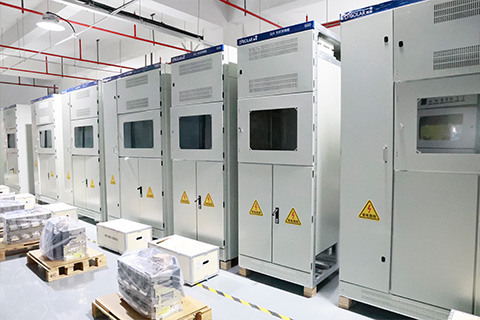
1. Compliance with Electrical Safety Regulations
At the core of any grid-connected cabinet installation lies adherence to recognized electrical standards such as IEC 61439, GB/T 7251, or other local equivalents. These standards define the performance and safety requirements for low-voltage switchgear and controlgear assemblies. They specify aspects like insulation resistance, dielectric strength, and temperature rise limits. Compliance ensures that each cabinet can withstand electrical stress and environmental challenges without posing a hazard to the equipment or operators.
2. Proper Grounding and Earthing Design
A solid grounding system is the foundation of electrical safety. During installation, all metallic components of the grid-connected cabinet must be properly earthed to eliminate potential differences and minimize the risk of electric shock. The grounding conductor should have sufficient cross-sectional area and be connected firmly to ensure long-term stability. In regions with high lightning activity, surge protection and grounding coordination play a key role in protecting the cabinet’s internal components from transient overvoltages.
3. Safe Cable Routing and Connection Integrity
Cables are the arteries of any electrical system, and their installation demands careful planning. Power and signal cables must be arranged in separate conduits or compartments to prevent interference and overheating. Each terminal connection should be securely fastened to avoid looseness caused by vibration or thermal expansion. In addition, labeling every cable clearly not only meets compliance requirements but also simplifies future maintenance and troubleshooting — a small detail that reflects a high standard of engineering discipline.
4. Overcurrent and Short-Circuit Protection
Safety standards emphasize the importance of protection coordination. Circuit breakers, fuses, and isolators inside the grid-connected cabinet must be selected according to the system’s rated capacity and fault level. Their operation characteristics should align so that faults are isolated locally without disrupting the entire network. This layered protection structure helps safeguard both the equipment and personnel, reducing downtime and ensuring continuous operation even under unexpected conditions.
5. Environmental and Mechanical Safety Considerations
A grid-connected cabinet often operates in environments that expose it to temperature variations, dust, or moisture. Therefore, installation standards require appropriate IP (Ingress Protection) ratings and ventilation designs. The cabinet’s enclosure should provide mechanical strength and corrosion resistance suited to its environment. Inside the cabinet, adequate spacing between components ensures safe heat dissipation and prevents accidental short circuits. These design and installation details combine practicality with foresight — essential qualities in building a stable power infrastructure.
6. Routine Inspection and Maintenance Protocols
Even after installation, safety is an ongoing commitment. Regular inspection of insulation resistance, grounding continuity, and protective device performance forms part of the safety framework. Documenting every maintenance record not only supports regulatory compliance but also builds an operational history that enhances system reliability over time.

Conclusion
The installation of a grid-connected cabinet is not merely a technical process — it is a commitment to safety and responsibility. Every bolt tightened, every wire connected, and every standard followed reflects the professionalism and care of those who build and maintain our power networks. By adhering to key safety standards, engineers do more than ensure compliance — they preserve the integrity of the entire power system and uphold the trust that modern society places in reliable electricity.


